
⦿ For seasoned professionals quietly surviving a toxic workplace who want to exit gracefully, protect their reputation, and regain professional control without starting over
Discover A Step-By-Step Framework To Help You Leave a Toxic Workplace With Dignity and Re-Enter the Market With Authority
Without burning bridges, oversharing your story, or disappearing from your industry even if you’ve already been quietly pushed out.

“I Always Gave 110% To The Company, Until I Realized My Efforts Were Being Taken For Granted.”
For years, I prided myself on being the dependable one — the person people turned to when things got tough.
I stayed late, mentored younger team members, fixed crises no one else wanted to touch.
And for a while, that dedication felt good. It defined who I was.
Until one day, I started noticing the subtle shifts.
Projects I’d led for years were being handed off “for exposure.”
My manager stopped looping me into key meetings.
The new hire (the one I’d trained) was suddenly presenting my work.
I told myself it was temporary. That my value spoke for itself.
But slowly, I started to see what was really happening:
I wasn’t being valued. I was being phased out.
Every email felt like walking on eggshells.
Every “quick chat” left me questioning if I was next.
And every time I looked in the mirror before work, I saw someone who used to be confident now just trying to survive another day without breaking.
But how do you walk away from something that’s shaped your identity?
How do you explain your exit without sounding bitter, broken, or like you’ve lost your edge?
That’s the part no one talks about — the quiet grief of realizing loyalty doesn’t guarantee dignity.

The Real Damage Isn’t Losing the Job. It’s Losing the Respect You Worked Years to Earn.

A toxic workplace doesn’t always look toxic from the outside.
It’s not shouting, or chaos, or obvious conflict.
It’s the quiet kind — the kind that slowly erodes your sense of value.
It starts small: you’re left off an email chain, your ideas are dismissed, someone else takes credit.
Then one day, you realize you’re no longer being asked for input, just compliance.
And that’s when the fear sets in.
“What if people think I’ve lost it?"
"What if my best work is already behind me?”
You still show up, still deliver, still act like everything’s fine, because the last thing you want is to look emotional or unstable.
But the longer you stay, the more invisible you feel.
And when you finally decide to leave, you’re hit with the next impossible question:
“How do I explain this without sounding bitter, defensive, or broken?”
Because in the professional world, reputation is currency.
And losing that, after years of loyalty and results, cuts deeper than any pink slip ever could.
But eventually, here’s what I learned:
Leaving Doesn’t Have to Damage Your Reputation. You Can Exit Professionally and Still Be Respected.
For years, we’ve been told that staying put is the safest move.
That leaving a difficult environment might “raise questions.”
That it’s better to look loyal than to look like a risk.
But what if the opposite is true?
What if walking away with intention and composure is actually the most professional thing you can do?
Because real leaders don’t cling to toxic environments out of fear.
They recognize when their value’s no longer being honored and choose to leave on their own terms.
The problem is, no one ever taught us how to do that.
How to talk about an exit without oversharing.
How to explain a career gap without sounding defensive.
How to stay visible and credible while you transition.
Most people try to figure it out alone, piecing together advice from blogs and job boards, hoping they won’t say the wrong thing in an interview.
But there’s a smarter, calmer way to handle this — one that protects everything you’ve built and helps you move forward with clarity and confidence.
Once you see what that process looks like,
Leaving won’t feel like losing anymore.
And now I’m about to show you what that process is.

You Don’t Need to Catch Them. You Just Need to Understand Them.
The world tells you to wait for proof.
To find the messages, the receipts, the smoking gun.
But that’s how cheaters win - they stay one step ahead while you chase evidence that only confirms what your gut already knows.
You don’t need to snoop or beg for honesty.
You need to understand the patterns - the way they distance themselves before they lie, the way they twist guilt into your direction, the way they mask avoidance as “needing space.”
Once you learn to read those micro-behaviors, you stop reacting emotionally and start recognizing reality.
You stop waiting for a confession that will never come, because you already see the truth in their actions.
And that’s where Inside the Mind of a Cheater comes in.
It’s not about catching them. It’s about decoding them, so you can finally stop doubting yourself and start trusting what you see.

You Don’t Need to Catch Them. You Just Need to Understand Them.

The world tells you to wait for proof.
To find the messages, the receipts, the smoking gun.
But that’s how cheaters win — they stay one step ahead while you chase evidence that only confirms what your gut already knows.
You don’t need to snoop or beg for honesty.
You need to understand the patterns — the way they distance themselves before they lie, the way they twist guilt into your direction, the way they mask avoidance as “needing space.”
Once you learn to read those micro-behaviors, you stop reacting emotionally and start recognizing reality.
You stop waiting for a confession that will never come, because you already see the truth in their actions.
And that’s where Inside the Mind of a Cheater comes in.
It’s not about catching them. It’s about decoding them, so you can finally stop doubting yourself and start trusting what you see.
⦿ INTRODUCING
The Dignified Exit Playbook: How to Leave a Toxic Workplace With Dignity and Re-Enter the Market With Authority

A self-paced guide that helps professionals explain their exit with confidence, protect their reputation, and stay respected as they move into new opportunities.
Designed for mid- to senior-level professionals, this playbook brings together polished communication tools, professional scripts, and actionable frameworks used by leaders navigating career transitions.
Rebuild emotional safety and self-trust
Strengthen your confidence in love and relationships
Recognize genuine connection vs. manipulation — before it’s too late
Developed with licensed psychologists specializing in adult attachment and trauma recovery, this method blends emotional regulation, self-trust frameworks, and guided reflection exercises so you can finally feel safe letting love in again.
Designed for exhausted new moms by a mom who’s been there.
Proven, pediatrician-reviewed methods
No apps. No rigid training. No guilt.
The Framework Seasoned Professionals Use to Exit Gracefully and Stay in Control
Inside this guide, you’ll find 4 communication tools that help you explain your departure, protect your credibility, and maintain authority in every interaction:
THE EXIT STORY FRAMEWORK — Craft Your 3-Sentence Exit Narrative
Turn a difficult or complex exit into a polished, professional story you can use in interviews, networking, or on LinkedIn.
You’ll learn:
Learn how to describe your transition with calm, credible language.
Move past defensiveness and communicate confidence.
Feel at ease knowing you have a story that reflects your professionalism.
You’ll leave every conversation knowing exactly what to say — and how to say it — so your exit always sounds intentional and professional.


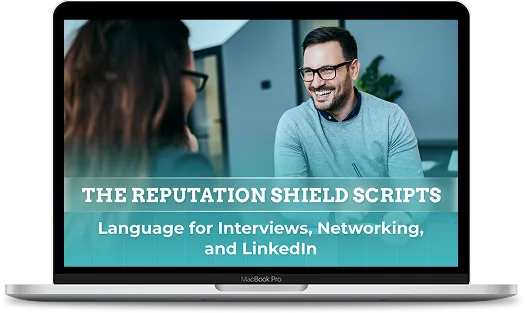
THE REPUTATION SHIELD SCRIPTS — Language for Interviews, Networking, and LinkedIn
Get ready-to-use phrases designed to help you sound composed and capable in every conversation.
You’ll learn:
Confidently handle “What happened?” questions.
Maintain professional relationships without oversharing.
Use phrasing that reinforces trust and leadership.
You’ll be able to talk about your exit naturally and confidently, without fear of saying the wrong thing or damaging your credibility.

THE OVERSHARE FILTER MAP — Decide What to Share, Skip, or Soften
Find the balance between honesty and professionalism.
You’ll learn:
Identify what’s safe to disclose and what’s best left private.
Avoid common oversharing mistakes that hurt credibility.
Keep conversations aligned with your future goals.
You’ll feel calm and in control in every discussion, clear on what supports your image and what quietly undermines it.


THE CREDIBILITY ACTIONS CHECKLIST — Protect Your Authority and Momentum
A five-step checklist to keep your professional presence strong and visible after leaving.
You’ll learn:
Refresh your profiles and presence with intention.
Take small, strategic actions that maintain your authority.
Stay confident and proactive during your transition.
You’ll stay visible, respected, and relevant, even between roles, so your reputation continues working for you, not against you.
You Don’t Heal by Chasing Proof. You Heal by Understanding the Pattern.
When you stop begging for answers and start seeing the truth for yourself, everything changes.
This isn’t about catching someone in the act, it’s about reclaiming your peace of mind. Because once you understand the game, you can’t be played by it anymore.
Inside the Mind of a Cheater gives you the language, the logic, and the lens to finally see what’s real — without the lies, the waiting, or the emotional chaos.
You don’t need closure from them.
You need clarity within you.
You’ve spent years building your credibility. Don’t let one toxic workplace define your story.
The Dignified Exit Playbook gives you the frameworks, scripts, and confidence to exit with grace and move forward with authority.
What To Expect After 21 Days
You stop reacting to lies.
You stop chasing closure.
Before

Mentally Exhausted and Scattered
Sitting in your car, rehearsing excuses for why work feels unbearable.
Staring at LinkedIn, terrified a single edit might raise questions.
Freezing when someone asks, “So, what happened?”
Avoiding messages from old colleagues because you don’t know what to say.
Feeling like years of hard work vanished overnight.
After
Clear, Energized and Confident

Speaking calmly and clearly about your exit with no overexplaining or guilt.
Updating your profile with quiet confidence, with every word signaling authority.
Answering smoothly — short, professional, and done.
Reconnecting naturally, with every chat reinforcing your credibility.
Realizing your experience still carries weight, and knowing exactly how to show it.
⦿ FREE BONUSES
Order Now And Get These FREE Bonuses:

Inside this 8-module system, you’ll uncover:
BONUS #1: Follow-Up Power Phrases
Because you can’t plan every question, but you can plan your answers.
Inside you’ll find polished responses for those tough curve-ball moments: the recruiter who digs too deep, the former colleague who wants “the real story,” the networking contact who catches you off guard.
These phrases keep you calm, composed, and in control so no conversation ever puts you on the defensive again.
You’ll walk away from every conversation sounding confident, consistent, and credible.
Red flag checklists built for real 40+ dating situations
Conversation scripts that reveal intentions without confrontation
A scoring system to measure trust readiness in new relationships
BONUS #2: From Bitter to Brilliant
It’s easy to sound frustrated when you’ve been treated unfairly and one wrong word can undo years of professionalism.
This guide shows you simple phrase swaps that turn reactive language into leadership language.
You’ll see how to replace “They never supported me” with “I realized it was time for a new challenge” — and dozens more just like it.
You’ll instantly sound steady, future-focused, and impossible to misinterpret.
BONUS #3: 5 Phrases to Avoid When Explaining Your Exit
Some statements sound harmless until they quietly undermine your authority.
This quick-reference guide highlights the five credibility-killers most professionals use without realizing it.
You’ll eliminate the subtle wording that costs respect and replace it with phrasing that builds trust.
Designed for exhausted new moms by a mom who’s been there.
Proven, pediatrician-reviewed methods
No apps. No rigid training. No guilt.
Why This Works (Even If You’ve Been Hurt for Years)
This method is based on real-world psychology, not pop advice.
Developed with therapists who’ve spent over a decade helping adults rebuild after heartbreak, it combines attachment science, self-trust frameworks, and guided regulation tools used in modern trauma recovery.
Based on evidence-backed emotional regulation frameworks
Written for mature adults with real-life responsibilities, not twenty-something daters
Created by professionals who’ve lived it and helped thousands heal through it
⦿ READY TO GET STARTED?
Here’s What You’ll Receive When You Order Today

The Dignified Exit Playbook, which include:
Exit Story Framework
Reputation Shield Scripts
Overshare Filter Map
Credibility Actions Checklist
3 FREE Bonuses
Instant Digital Access
All for just $7.
⦿ Still Got Questions?
Frequently Asked Questions
What exactly is The Dignified Exit Playbook?
It’s a digital, self-paced guide that helps experienced professionals navigate toxic exits with dignity and re-enter the market with confidence and authority.
Is it only for people who’ve been fired or let go?
No. It’s for anyone planning, experiencing, or recovering from a toxic or difficult exit, including those who are still employed but preparing to leave.
Will it help if my situation was complicated?
Yes. The playbook helps you clarify what to share and how to phrase things professionally, no matter how complex your circumstances were.
Is this coaching or therapy?
Neither. It’s a practical communication and reputation-protection tool built for professionals.
How soon can I use it?
You can start immediately. It’s digital and self-paced — no sessions or scheduling required.
Will I sound fake or rehearsed using the scripts?
Not at all. The language is professional, natural, and adaptable to your own tone of voice.
What if I’ve already left my job?
The playbook still applies. It helps you reframe your story and re-engage your network with confidence.
Will this guarantee a new role?
It doesn’t make career promises — it gives you the communication tools and credibility strategies that make opportunities easier to pursue.
Is this only for corporate professionals?
No. It’s equally effective for nonprofit leaders, healthcare professionals, public-sector executives, and anyone in senior management roles.
What makes this different from generic career advice online?
Generic advice tells you to “stay positive” but doesn’t tell you what to say. This playbook gives you the exact phrasing, filters, and credibility steps that protect your professional image in the real world.
You Don’t Have to Keep Wondering If You Handled It Right.
You’ve given too much of yourself to walk away questioning your worth.
You deserve to leave with your head held high, clear on your story, calm in your decisions, and confident in what comes next.
This is your moment to stop replaying what went wrong and start shaping what’s ahead.
To be seen again — not as someone who left, but as a leader who chose to move forward with dignity.
You’ve already earned your credibility. Now it’s time to protect it.
Ready to Transform Your Tiny Yard?
You don’t need acres of land…
You don’t need years of gardening experience…
And you definitely don’t need to waste another season “waiting until next year.”
Click below to grab your Tiny Yard Garden Planner now and take the first step toward the thriving mini-garden you’ve been dreaming of.
Your space is ready to bloom. All it needs is your plan.

Terms Of Use | Privacy Policy
All rights reserved Strategic Elevation Solutions 2025